

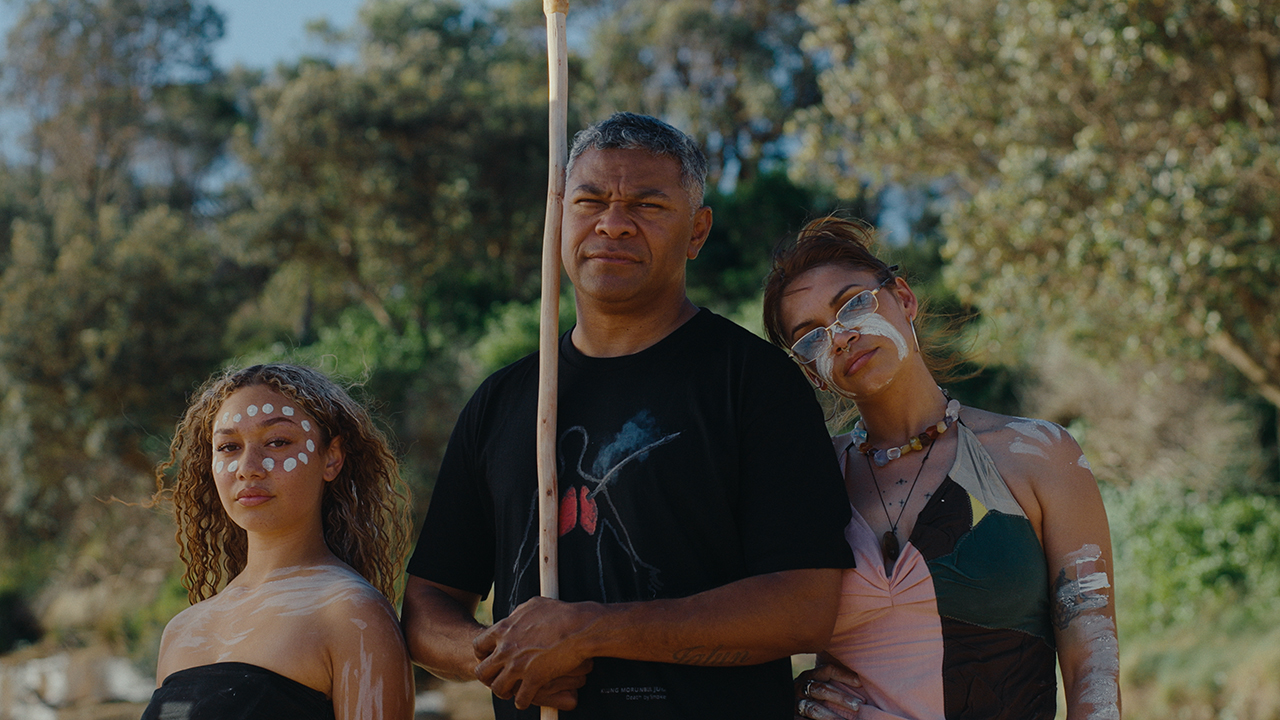
FEATURE: Voices of Resistance (Dir. Michael Ridley & Dion Brownfield) Warraay Puthu (Bad Smoke) campaign
Voices of Resistance is a supergroup made up of five Indigenous artists; Nooky, Dallas Woods, Fred Leone, Soju Gang and RIAH and more than 30 young Aboriginal and Torres Strait Islander health workers and leaders. They come from seven separate community-led health promotion teams from across the nation as part of the Tackling Indigenous Smoking (TIS) program. Working with researchers at the ANU‘s Yardhura Walani Tobacco Free Program and Grand Trine Creative they have created an anti-smoking, anti-vaping and anti-Industry campaign called Warraay Puthu. Meaning ‘Bad Smoke’ in Ngiyampaa language, the campaign takes its name from the featured artwork created by Wiradjuri and Ngiyampaa artist, Matthew ‘Melnunnie’ Brettschneider from far western New South Wales.
-
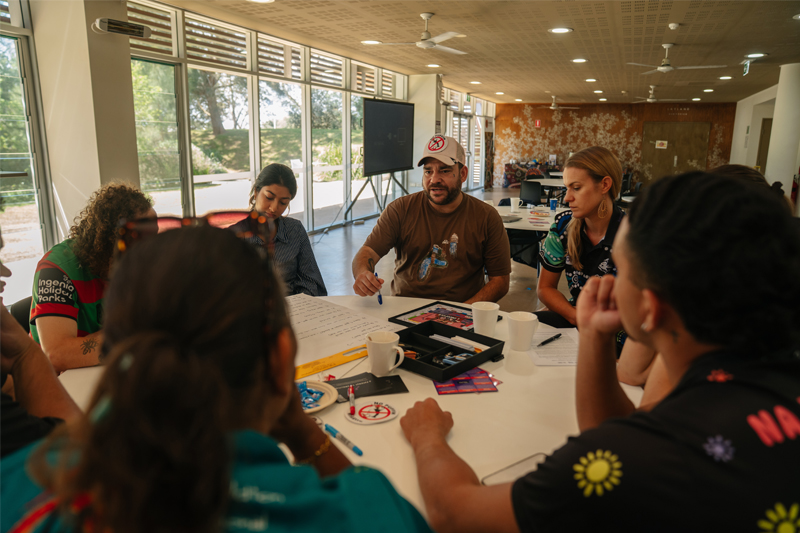
- Dallas Woods & Tasker workshop lyrics & campaign ideas with Tackling Indigenous Smoking team members from Apunipima (Cape York), Na Joomelah (La Perouse), Torres Health (Torres Strait) & Barndi Yarraly (Geraldton)
Voices of Resistance is the flagship creative product of Warraay Puthu (Bad Smoke), a youth-led movement supporting nicotine-free futures and challenging the harms caused by the commercial Tobacco and Nicotine Industry through culture, creativity, and collective action. Voices of Resistance emerges at a time when smoking remains one of the leading preventable causes of death among Aboriginal and Torres Strait Islander peoples and vaping rates among young people have increased substantially in recent years.
Community is given a starring role as heroes in the campaign video – the film clip for the song ‘Voices of Resistance’ that was collaboratively written, recorded and filmed in just five days. TIS leaders standing staunch against the camera, in equal measure as hard as they are proud. They are in a fighting stance. Representing community from Nations across the land, from the Torres Strait and the Cape in the north all the way down to Coffs Harbour and La Perouse in the East and to Geraldton and Perth in the West. Arms folded against the soft boxes, light diffused but still close enough to cast a shadow: the Ancestors are watching. Collaborating Garrwa and Badjtala artist Fred Leone, an acclaimed musician, Yidaki player, and Songman, shared how weaving tradition with a contemporary critique of the structural conditions affecting mob created something organic, authentic and powerful:
“It’s always a fine balance when creating from the position of a people walking in two worlds: one being the Western concept of capitalism and its effects on not only our people but the global community and the planet; and the other that of our Elders, which saw our people live in harmony with each other and the environment, for thousands upon thousands of Generations. Where there was a conscious effort to do so and put people and the planet first. So I feel the balance is organic for most First Nations artists. The inspiration behind bringing them together was to show the audience the beauty in strength of knowledge, culture and unity between mobs to give a powerful message, not only from Aboriginal and Torres Strait Islander communities, but as citizens of this country. We know this [commercial Tobacco and Nicotine] Industry is literally banking off our collective misery. So to have First Nations people leading the fight for the country as a whole is a powerful unifying statement in itself.”
-
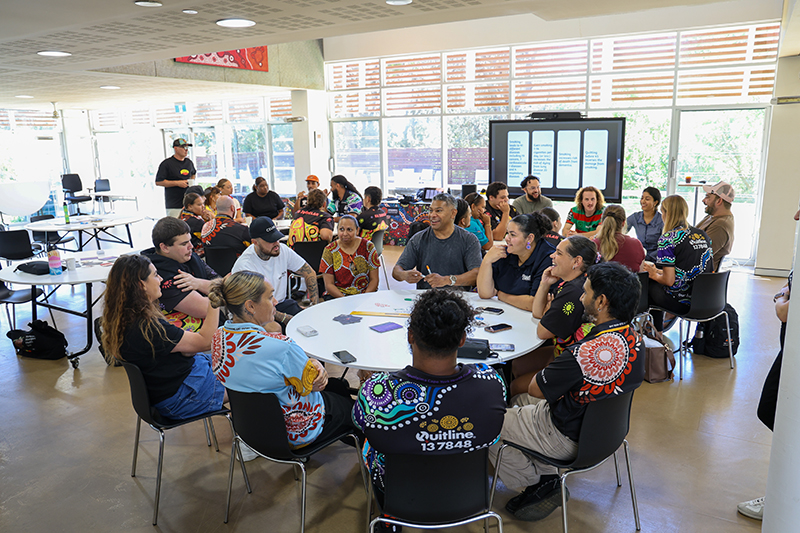
- Weeklong creative workshop in November 2025. On day one Fred Leone, Nooky, RIAH, Soju Gang, Dallas Woods, Tasker & Dion Brownfield split up to work with groups of Tackling Indigenous Smoking team members from Torres Health, Apunipima, Deadly Choices, Ready.Quit.Solid, Na Joomelah, Wugen Wal-Yan & Barndi Yarraly to write their own verse for Voices of Resistance & fun social media content for the Warraay Puthu campaign
The “Warraay Puthu” campaign embodies strengths-based approaches to prevent harms from tobacco and nicotine. By supporting communities in a way that promotes self-determination, this approach centres culture and prioritises building wellbeing through the work of their young leaders. The creators of the music video and wider campaign see this as an important moment for truthtelling for a critical public health issue. The thumping hip hop record is about drawing a line in the sand, and allowing communities to stand up and call out the actions of the Commercial Tobacco and Nicotine Industry in targeting Aboriginal and Torres Strait Islander peoples and demand an end to their harms. Co-director Dion Brownfield describes it as a matter of intentionality and authenticity:
“The collaboration process was really intentional from the start (…) Each team brought their own energy, language, humour and community truth, and that shaped the performances and the way the story landed. Musically, Fred Leone’s contribution was a huge elevation. His traditional songline, alongside his Yidaki playing, brought a grounded cultural authority to the track — and we supported that with clapsticks so the rhythm and cultural texture sat right. Visually, brother Matt from Melnunnie Arts helped carry the cultural theme through painting, embedding story and symbolism into the campaign’s look and feel. On the performance day, having Isaac Bamblett there was powerful. He’s one of my favourite traditional dancers/warriors — when he dances, you can feel the Ancestors around. He stomped the concrete so hard it lifted everyone, and you could see the TIS workers and artists feed off that energy and step up. Ultimately, authenticity comes from having mob leading and shaping the work. When you bring together that level of talent and connection to culture — and you’re making a statement about protecting our people”
-
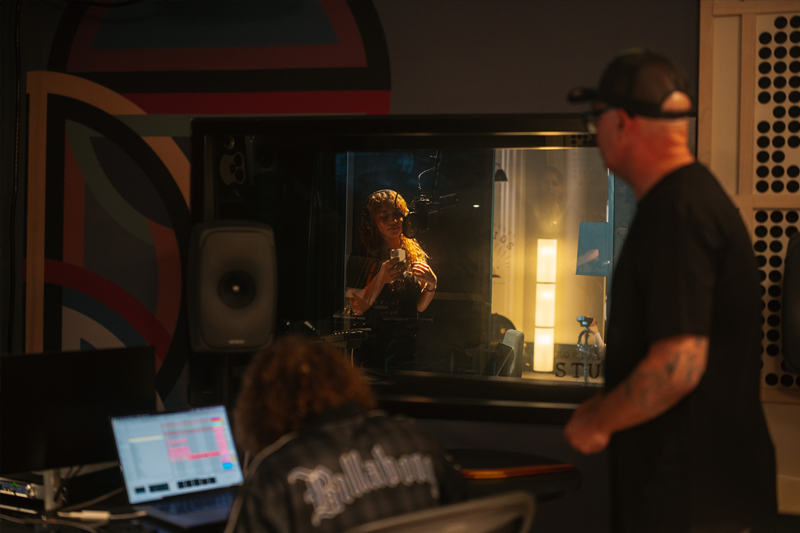
- Dion Brownfield & Tasker recording RIAH at the Universal Music Forbes Street Studios, Woolloomooloo
Musically, the project has been designed with a similar tone in mind to anthemic mainstream hip-hop but with traditional cultural song and music, such as the inclusion of Fred Leone‘s hook sung in language and playing of the Yidaki. The project serves as a means to arm young Aboriginal and Torres Strait Islander creators, artists, and health leaders with the tools to create their own smokefree and vapefree narratives in their communities.
For Associate Professor Raglan Maddox (Bagumani (Modewa) Clans, Papua New Guinea), lead of the Yardhura Walani Tobacco Free Program at the Australian National University (ANU), the evidence against smoking and the vital importance of this campaign is overwhelming:
“We’ve known for more than 75 years that tobacco kills when used as intended, so why is it still sold on nearly every corner, in everyday places? This song and campaign grew from conversations with young Aboriginal and Torres Strait Islander health leaders, who are questioning why communities continue to be blamed for smoking and vaping, while the role of the commercial Tobacco and Nicotine Industry in targeting and sustaining addiction is largely ignored (…) This campaign is a call for structural reform to protect current, and future generations. Nearly half of Aboriginal and Torres Strait Islander peoples are under the age of 25. We know that if young people reach adulthood without smoking or vaping, they are unlikely to start later. That creates a critical window of opportunity to prevent uptake and move toward ending the health, social, and cultural harms caused by tobacco and nicotine.”
The campaign draws on a growing body of Indigenous-led research examining tobacco and nicotine industry influence, youth vaping, commercial determinants of health, and pathways towards tobacco and nicotine eradication. Rather than treating smoking and vaping solely as matters of individual choice, this work highlights the broader social, commercial, and political forces that shape health outcomes. Since launch, the movement has generated more than 1,300 streams, 18,500+ views of the main music video post, and over 180,000 views across Warraay Puthu content, demonstrating strong engagement and early evidence that the campaign is resonating with young audiences.
-
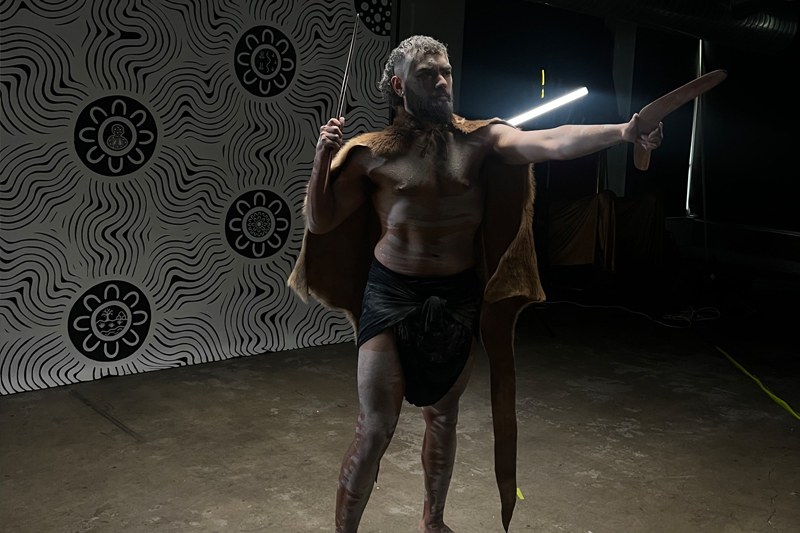
- Behind the scenes shooting the Voices of Resistance music video with Isaac Bamblett at Nooky’s We Are Warriors studio, Ultimo
The production team Grand Trine have created dozens of these collaborative music videos with Aboriginal and Torres Strait Islander communities all across Australia, many for the TIS program, all with the same fast-paced approach writing, recording and shooting the video in a matter of days and editing everything together in one week. The music video was shot on Gadigal and Bidjigal country, with all of the externals shot in the golden hours. To maintain colour and minimise noise, co-director Michael Ridley notes that:
“We shot most of the music video on a Sony FX9, using the NiSi Athena Primes, which have a clean look but vibrant colour rendition. Some of the slow-motion cutaways were filmed on a Sony FX6. The colour grade was a stylised Kodak 250D film emulation, with the saturation boosted slightly. The warmth of this emulated film stock made all the outdoor scenes feel really natural, whilst taking off the digital edge to the indoor studio lighting. I also utilised some film burns and light leaks to add to the grit and hype of the performances.”
-
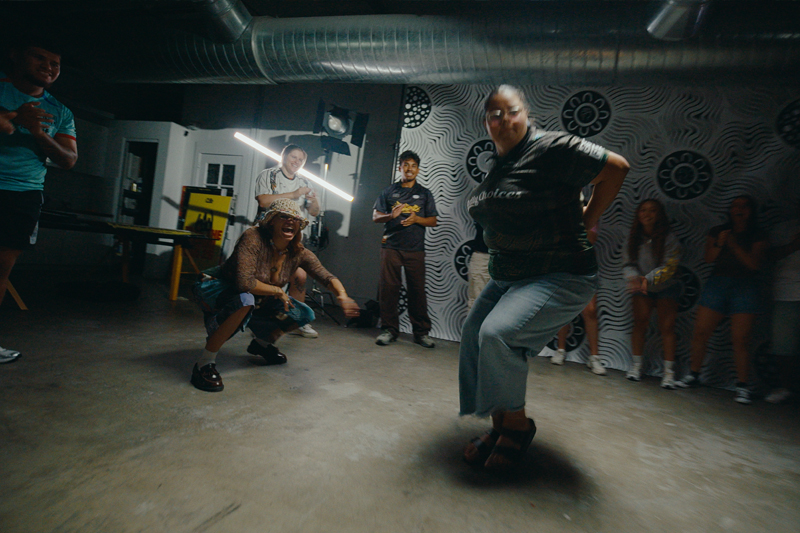
- Behind the scenes at We Are Warriors. Soju and RIAH cheering on the TIS team members as they take centre stage for the dance circle & breakdance scene
As for the hype of the performances and artists involved, this is seriously talented work being displayed. There is a supreme, divine and dynamic synergy flowing between all artists at the shoot out on Country at La Perouse and back in Nooky‘s We Are Warriors studio in front of the campaign art from Melnunnie, who has previously collaborated with Nooky on his outfit for a blockbuster 2024 performance at the ARIAs. From Melnunnie’s high-contrast backdrops taking centre stage to the ingenuity of artists Nooky, Fred Leone, Dallas Woods, Soju Gang and RIAH, everything came together beautifully. Co-director Michael Ridley detailed this, saying:
“We filmed part of Nooky’s verse on a basketball court and shot some scenes of him doing ‘shake a leg’, which ended up being a powerful visual of traditional culture meeting urban influence. We also chased the sunset filming Fred Leone’s powerful chorus over some rockpools, and after calling in a favour from my brother who lives in Sydney, we were able to get some fire twirling sticks and fuel to get RIAH performing some fire twirling just after the sun had set!”
-
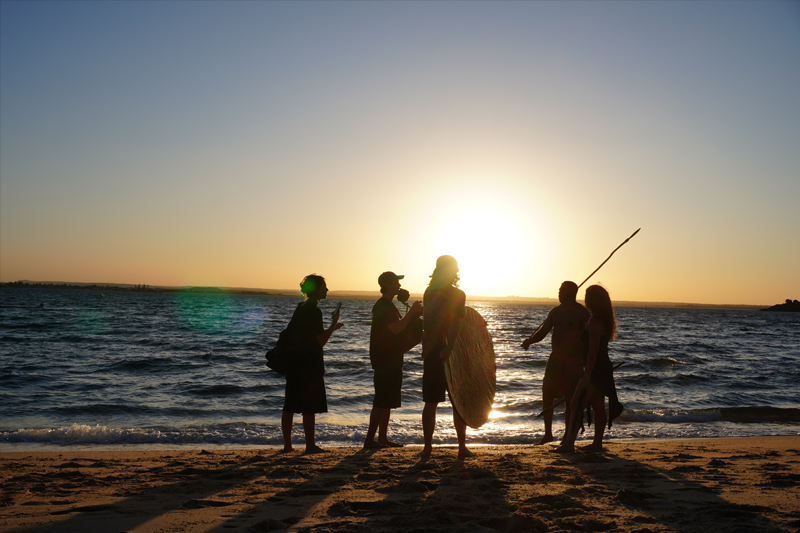
- Behind the scenes of the sunset shoot at La Perouse. Mike Ridley & the Grand Trine crew with Fred Leone & RIAH
Even this Pasifika puts the vape back in the dashbox while I’m driving and this song comes on. The result of the visual is an evocative montage of shots that remain in your head like a battlecry. For Naarm-based leader, DJ and proud Wiradjuri, Gunnai /Kurnai & Yorta Yorta woman, Soju Gang (Sky Thomas), youth leadership brings a unique strength to this song and campaign:
“So often programs are created by governments and organisations and expect young people to come in. This one is different in that it has been created by young mob and then the program has been built around that.”
The campaign also challenges conventional approaches to health promotion. Rather than relying on externally designed messaging, Voices of Resistance demonstrates what can happen when young Aboriginal and Torres Strait Islander peoples lead the creative process, define the narrative, and communicate in ways that resonate with their peers. In this sense, it offers a practical example of contemporary best practice in Indigenous-led, strengths-based health promotion.
-
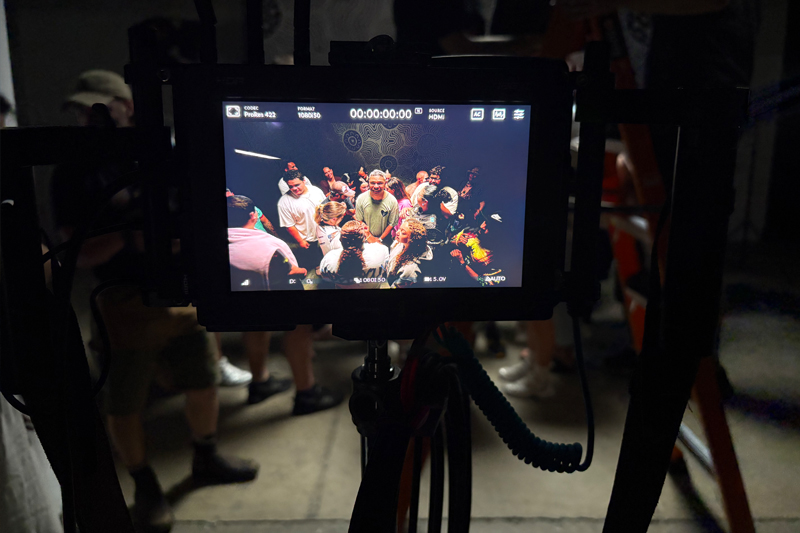
- A behind the scenes monitor shot of Fred Leone surround by TIS team members, Soju & RIAH for the dance scenes at We Are Warriors
By empowering and uplifting young Aboriginal and Torres Strait Islander peoples and giving them the creative tools to tell their own stories, in their own voices, Voices of Resistance achieves something rare. It is a powerful piece of culture, creativity, and truth-telling that challenges industry-driven harms while inspiring a healthier future for the next generation.


