

FEATURE: Tommy Lefroy – Angel in the House (Dir. Tessa Mouzourakis & Brendon Burton)
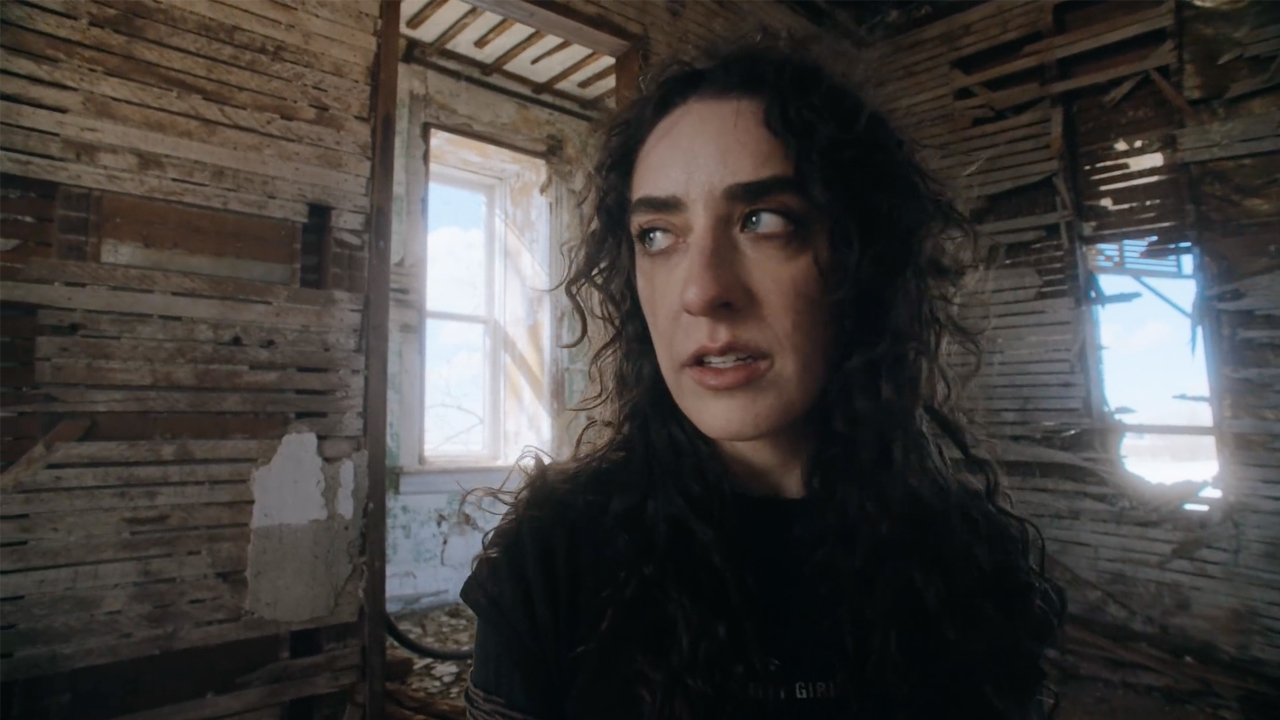
Awakening from a dream, unsure of how she came to and finding her place in the world, a young woman lies face down in the snow. The icy chill grips at her palms, hands adorned in sleek black varnish and a torso clad in a chic matching shirt. A figure draped in white dances by in the distance. The unnamed protagonist has found herself onlooking a foreboding figure, not a person but a ruined house dilapidated by time and tradition. This house has been here stoically unmoved by the elements, yet rusted and frayed all the same. This is the scene set by directors Tessa Mouzourakis and Brendon Burton in the spectacular and awe-inspiring new visual for Angel in the House by indie rock band Tommy Lefroy. The music video seeks to interrogate the meaning of feminine creative expression and the role of a woman in her liberation and self actualisation.
-
- Behind The Scenes
“What is ‘herself’? I mean, what is a woman? I assure you, I do not know. I do not believe that you know. I do not believe that anybody can know until she has expressed herself in all the arts and professions open to human skill”. This is an excerpt of the speech Virginia Woolf gave titled Professions for Women in 1931 about the role of the woman writer needing to kill the ‘Angel in the House’. In the music video of the same name from the upcoming album The Precariat The Precariat, boundless creative expression and profession is fully on display from Tommy Lefroy band members Tessa Mouzourakis and Wynter Bethel. Aside from singing, songwriting and production, both members take on filmmaking roles from directing and editing by Tessa and movement direction by Wynter. Co-director Brendon Burton spoke to the musicians’ multidisciplinary approach, saying of their collaboration:
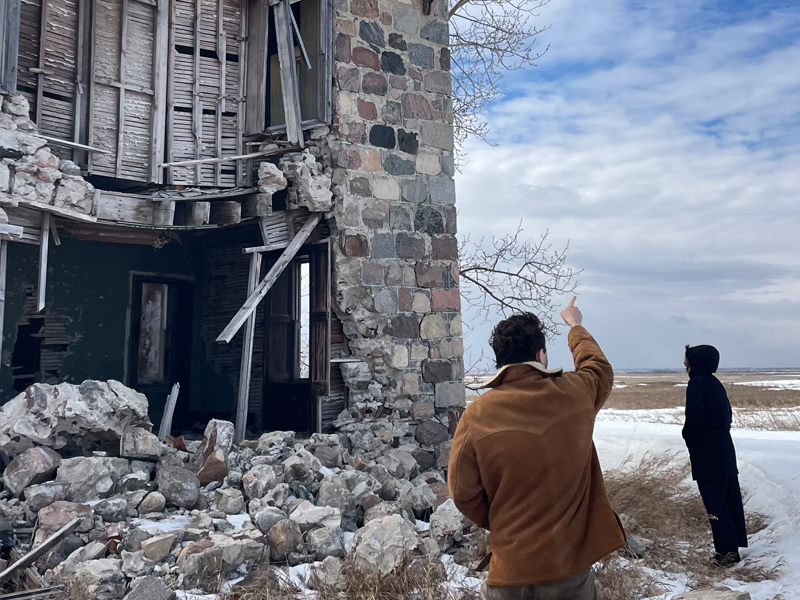
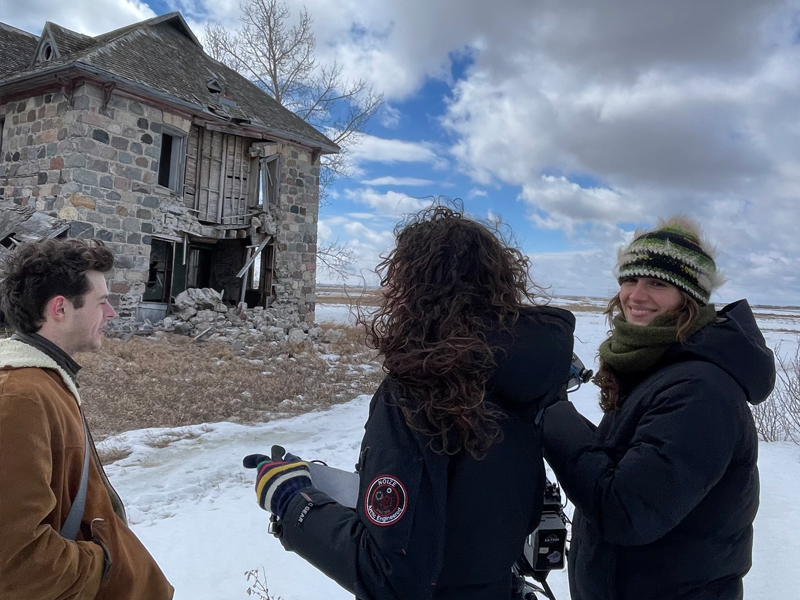
“Tessa reached out to me to work on the visual world of The Precariat and I was immediately interested in the concept and tone of the album as a whole. Her along with Wynter put a lot of trust in me when they agreed to go to these extremely remote locations to capture the visuals. For Angel in the House in particular I knew it had to stand as its own from the majority of the locations found throughout the rest of the album, the setting had to directly correlate to the concept and feeling of this song and the subject matter of the pristine vs the profane. Having previously visited this region of the high plains a year prior I felt as if that house and church in particular felt almost storybook in appearance and that would increase the contrast of decay that was overtaking them. People clearly put so much care and love into these places and even that didn’t change their fate or save them from time. Those details really helped weave the concept and structure that Tessa envisioned into its final form; physical manife was stations of the ideal in our current time seem almost tragic. Wynter’s performance in front of the church as the Angel in the midst of a blizzard pushed it to become something that was really like lightning in a bottle. This video was a labor and a journey to create and I’m extremely grateful for the entire team that faced the storm to make this a reality.”
-
- Behind The Scenes
Woolf deepened her metaphor of the Angel, questioning how if the Angel was dead; what then remained? She described a simple and common object – a young woman in a bedroom with an inkpot; (“In other words, now that she had rid herself of falsehood, that young woman had only to be herself”). Woolf used this metaphorical device of a girl in a bedroom with a pen in her hand to convey the simultaneous simplicity and expansiveness of the role women must take to overcome creative hurdles and face the unknown. The lyrics of ‘Angel in the House’ speak to this truth where constant reinvention becomes the key to avoiding stagnancy, to varied success especially when faced with patriarchal expectation. Tommy Lefroy sings about how they thought they “hacked it, wrote then redacted” figuring out their self-determined fate, only to hear “the angel in the mouth of a friend” and how “no matter how I try to run, the angel comes around again”. Speaking to their songwriting process, Wynter Bethel describes the inspiration:
“I first heard of Virginia Woolf’s 1931 speech Professions for Women, through a book by Lauren Elkin called Art Monsters, which explores feminist art. In her speech, Woolf refers to societal expectations of women as this character, ‘the Angel in the House’, which she had a contentious relationship with, and felt she had to defeat in order to achieve her ambitions as a writer. It immediately struck me as a song title I wanted us to write, as the concept felt just as relevant today as it did nearly a century ago. With the title in mind, I started writing the first verse based on a conversation we had with a friend, in exploration of how archetypes of ideal women have changed, but still confine. The first verse is more about the modern notion of a sort of “manic pixie dream girl” type, and the ways it still plays into the hand of even Woolf’s Angel. This idea of a woman, carefree and nonconformist, yet still somehow primarily an instrument in someone else’s story. The chorus and second verse nod more to the traditional roles of women, ways they’re reflected back to us in culture, and through friends and loved ones. For the music video, we wanted to portray the Angel, and the modern woman directly.”
-
- Behind The Scenes
Taking its name from the economic term coined by economist Guy Standing for a growing class of people living with increasing instability, Tommy Lefroy’s debut album ‘The Precariat’ feels centred stylistically and thematically by a song like ‘Angel in the House’. In Marxist theory, the base and superstructure model explains this succinctly where base means of production and labour shapes superstructures such as family, education and politics which in turn maintains and legitimises the base cyclically. The ‘angel in the house’ would then represent a base means of emotional and physical labour burdened onto women from a young age, and superstructures such as patriarchal (and heteronormative) expectations in turn shaping creative output and maintaining the house as a whole.
-
- Behind The Scenes
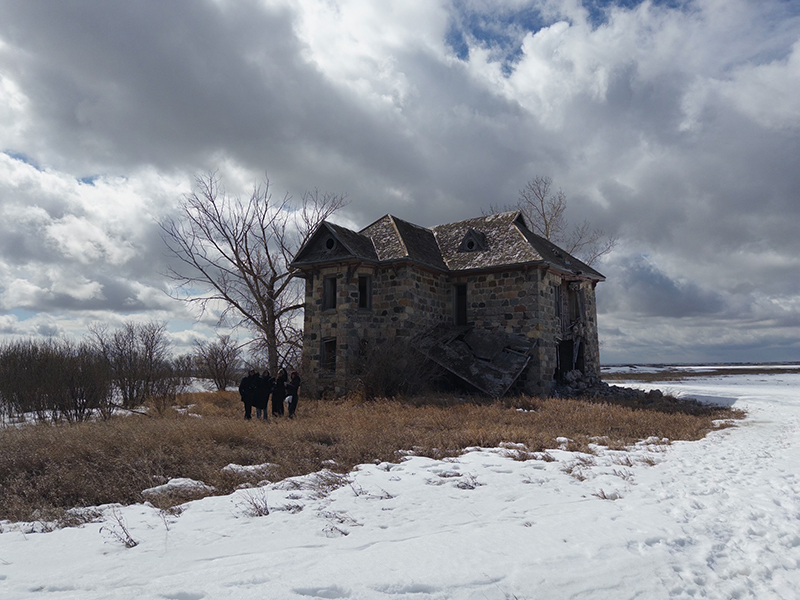
Virginia Woolf’s theorising on gender and class further helps shape and define the sociopolitical and economic underpinnings of the band’s text with writing such as the essay ‘A Room of One’s Own’ (1929) by Woolf which expounds that “a woman must have money and a room of her own if she is to write fiction”. The financial independence that Woolf speaks of is simultaneously within and further out of reach from the song’s protagonist. This friction and impermanence is felt both visually in the crumbling house of the music video and in its lyrics; “lifetime rent and house wine, suitcase lying at the foot of the bed”. The house where the music video was shot feels emblematic of this structural and systemic rot. Co-director and band member Tessa Mouzourakis spoke to the process of connecting with her collaborators and finding the location:
“I came across Brendon’s work at the end of last year, and was instantly drawn to his incredible landscapes and compositions. I was struck by how his personal work as an artist explored similar themes and questions we wrote about in The Precariat. Our collaboration came really naturally, and it was such an inspiring experience to build the visual world of the Precariat with him. Brendon was the master behind all the locations on this shoot. When he showed us images he’d taken from his last trip to the stone house, I couldn’t believe it was real. In some ways, the house felt like an extension of the metaphor of the Angel. This crumbling facade of the feminine ideal and all its sinister undertones. The house also comes from an era a lot of “tradwife” and “homestead” type influencers evoke in their content and messaging. The house, in its various stages of decay, felt like a nod to the problematic and fantasized nostalgia for “traditional family values” being peddled online and at young women today.”
-
- Behind The Scenes
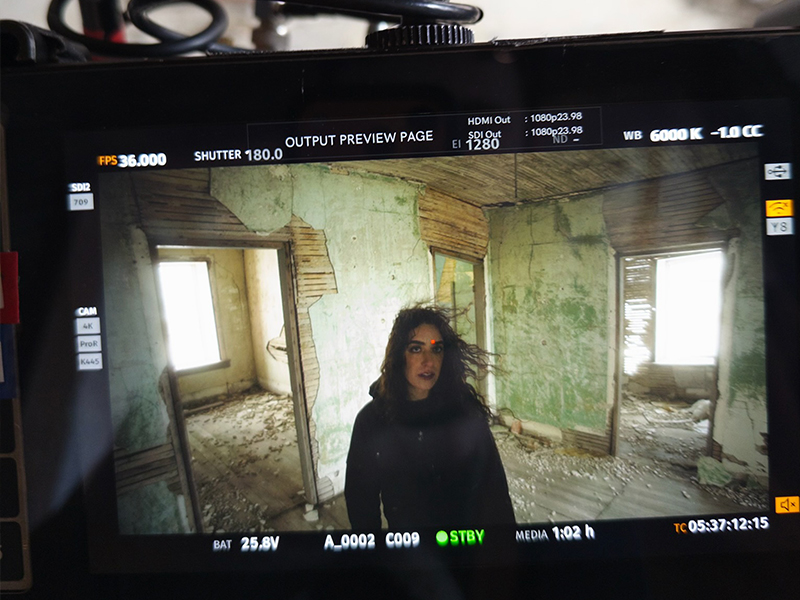
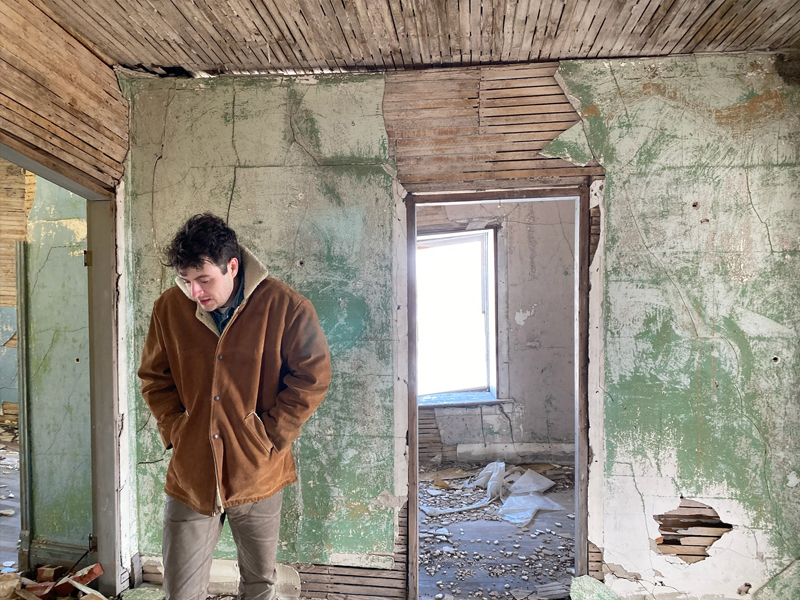
Peeling paint covers the walls, and light peaks through the wood beams. The sweep of the landscape captured by the camerawork feels like something straight out of a Terrence Malick film, and was partially inspired by the artwork Christina’s World by Andrew Wyeth. Colourist Sam Howells achieved a visually bold contrast of natural brightness with hues of beige and brown so as to “bring out the contrast and textures in the video to really immerse (the viewer) in the decomposing building while retaining a more muted palette to match”. Director of photography Sam Tetro discussed the filming process and visuals more in-depth:
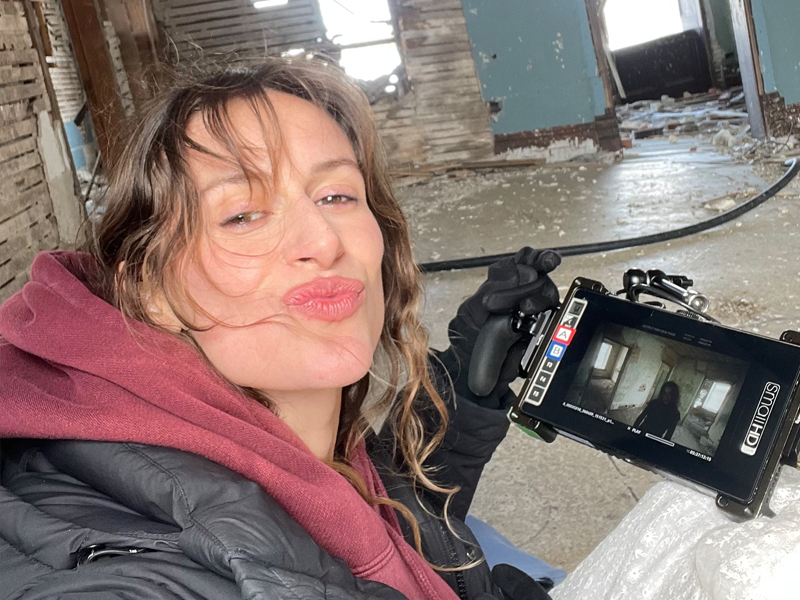
“(Extensive pre-planning) set the tone for me to bring in my love of natural light and a bit of handheld work, and I had an absolute field day once we got to shooting. The locations gave us so much to work with, and we did our best to use the spaces as a stage for Tessa & Wynter to become Angel & Tommy. That said, we hit our coldest day of shooting out there and Wynter and Tessa were real troopers, heading out into a literal squall in the middle of nowhere to perform. That fight scene, they really gave it their all, and it was so fun to get dynamic and move with them. I used my trusty Alexa 35, which gave us the full gamut from highlight to shadow detail. For lenses, we shot on the Angenieux DP Zooms 15-40 and 30-80 — perfect for versatility and helped us get some really beautiful shots.”
-
- Behind The Scenes
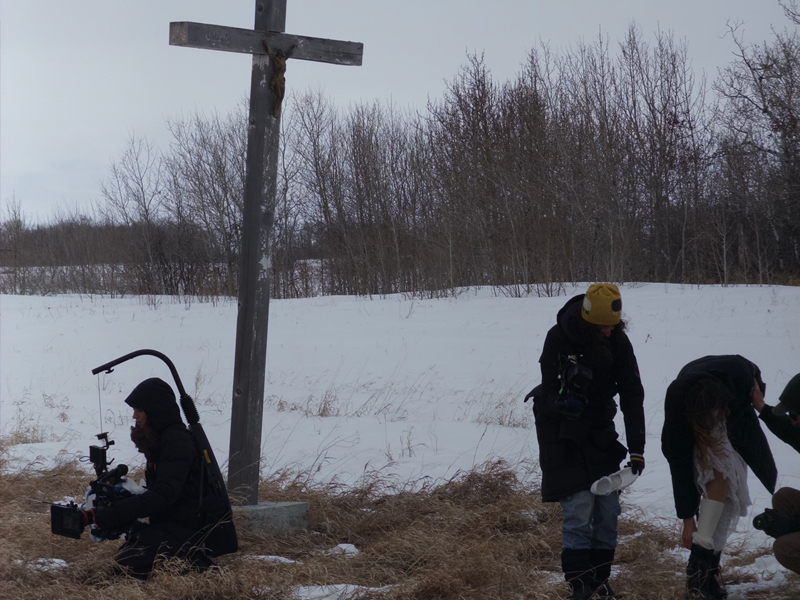
As for the Angel herself, she gracefully inhabits the space in a pesteringly pleasant almost parasitic way. In ‘A Room of One’s Own’ (1929), Woolf suggests that the female writer is always ‘an inheritor as well as an originator’ which is the reason for the need for matriarchal financial independence according to Dr Divya Singh in her 2024 paper ‘Virginia Woolf and Feminism’. In some ways the Angel and the Tommy girl represent both the inheritor and the originator. The music video inevitably culminates with the Tommy girl clashing with the sauntering Angel figure. As Virginia Woolf expressed in Professions for Women (1931), “There was an explosion. There was foam and confusion. The imagination had dashed itself against something hard. The girl was roused from her dream. She was indeed in a state of the most acute and difficult distress.” The winner of this fight is unclear but the house remains triumphant. Wynter Bethel explored a number of influences in the movement work for the Angel character and elaborated further:
“This was my first time doing anything of this nature in adulthood, so it was exciting to venture into new territory of expression. I think of it more as “free movement” than dance, it’s very instinctual and guttural. I’m a huge fan of performance artists like Ana Mendieta and more recently Sonya Mohova, for their exploration of feminine intensity. The character of the Angel, shaped by the sonics of the song, had an obvious intensity to me. She was powerful and knew it, but desperately vying for approval. I thought she should be deceptively playful, and of course have a sense of effortlessness, but needed an undertone, maybe feeling a little scorned, maybe even aware or hurt by modern rejection or contention over her archetype, manifesting into a fear of not being wanted, something to motivate subservience. Maybe subservience was the hardest thing to get across because we lacked a masculine presence in our narrative ha — in relation to the “Tommy girl”, the Angel needed to be entirely persuasive, haunting and taunting her. ”
-
- Behind The Scenes
Willingly and intently I stayed with the band’s responses to discuss the questions and answers we shared about the enigmatic marvel that is this visual. While our time was indeed up; the artists involved ceaselessly continue to create and move onto new structures to shift the paradigm once more, with their forthcoming debut album ‘The Precariat‘ out soon (October 23rd via Thirty Tigers/Civilians).


