

FEATURE: alt. – Sucker Punch (Dir. Bryce Kraehenbuehl & Daniel Wells-Smith)
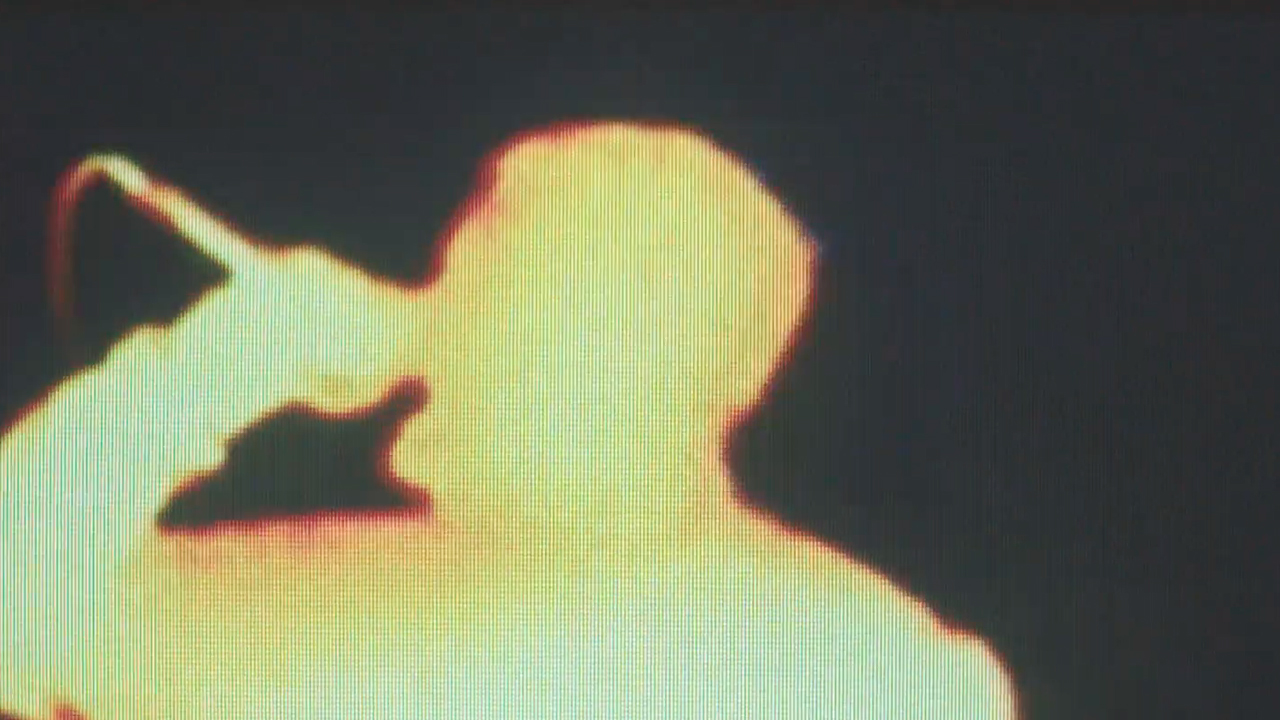
What do you imagine the future will look like? In the eerily realistic music video for ‘Sucker Punch’ by alternative rock band alt. surveillance capitalism rules supreme and holds everyone captive no matter their creed. Between the blur of neon soaked thermal images, our anonymous protagonists are captured by sharp, jolted almost surgically precise digital camerawork. The band created an entire world and curated sound for their new EP, which blends metal, hard rock and punk elements to rip-roaringly effective results. In this world, whistleblowers fight for their collective rights and try the best they can to withstand the oppressive gaze of a dystopic, equally faceless big tech. The music video’s co-director & producer Bryce Kraehenbuehl talked in-depth with CLIPPED.TV about the filming of this clip and the suite of visuals for a bigger project in the works, detailing:
“With this upcoming EP from ALT. there were clear overtones of a kind of dystopian world that the band was creating and alluding to. For each clip we did for the EP I was looking to focus on a different aspect of this dystopian world. This particular clip I was looking at presents anonymity in this world with the visuals reflecting the kind of imaging that is used to surveil people i.e. black and white and colour thermal imaging. Dan (the co-director and member of the band) and I talked about doing portraits without faces to push this idea as well as push the intensity of the video. The idea behind these portraits was to portray a group of whistleblowers in this dystopian world with the government zeroing into all of them.”
-

- BTS photo by Andre Donadio
The camerawork mirrors the panopticon of modern CCTV cameras and AI based tracking technology. In our current day and age, where supermarkets imperiously employ military technology used offshore for criminal purposes, this visual feels like a beacon of optimism and a way to deal with the mundane seen through a fresh lens. Bryce discussed the process of filming this, sharing about working with the band and the equipment involved:
“(The band) wanted the video to feel like it existed inside a surveillance-driven dystopian world, and the thermal imagery was one of the visual tools to reinforce that idea. We experimented with several approaches before finding the right solution. Initially we tested different cameras, including a Blackmagic monochrome infrared camera, but eventually we settled on using a RED Komodo. To achieve the effect, (cinematographer André Donadio) shot those scenes in locations with a lot of depth in the background, which helped create separation in the image. In post-production, we processed the footage in DaVinci Resolve, converting it into a depth-map-style black-and-white image and then applying a custom infrared LUT designed for proper thermal cameras. This process gave us much more control over the image while still maintaining the visual language of thermal surveillance footage.”
-

- BTS photo by Ella Burton
The visual language of the thermal footage scanning over the band is startlingly direct and makes the threat of being observed more potent and plays with the idea of who is watching who in this digital age. Coupled with these looser close-up scenes, feeling like a predator hunting prey, the digital camerawork is equally sinister as the stalking of these anonymous whistleblowers occurs slowly and methodically. The camera tracks passers-by through crowds and glances across buildings obsequiously. Yet the band stays strong, thrashing in sound protest of their hounded surrounds. Bryce gave more insight on how the lenses used helped achieve a horror/thriller effect, describing:
“We mainly used two zoom lenses. The Fujinon 20–120mm was used for the cleaner looks — particularly the back-of-the-head shots and close-ups — on the ARRI Amira. For the street-crossing scenes with people moving through the frame, we used an Angénieux 25–250mm on a Canon C500 Mark II, shooting in Super 35 mode. Visually, I was trying to support Bryce and Dan’s concept for the music video, which had a strong dystopian and surveillance-driven atmosphere. The approach was to combine the locations with natural light whenever possible, or shoot at the best times of day so the light would create strong shapes and textures in the environment. We were intentionally aiming for an image that felt slightly uncomfortable and not easy to digest. It’s difficult to name direct influences in something so experimental, but cinematographers whose work I admire definitely left an imprint on the visual approach — particularly Jeff Cronenweth in Fight Club and Darius Khondji in Se7en. Another important element came later in post-production. After the video was edited and graded, we re-filmed the finished image off a CRT television. That process introduced analog artifacts and helped create a more authentic surveillance texture, while also blending the different camera sources together into something more organic.”
-
- BTS photo by Ella Burton
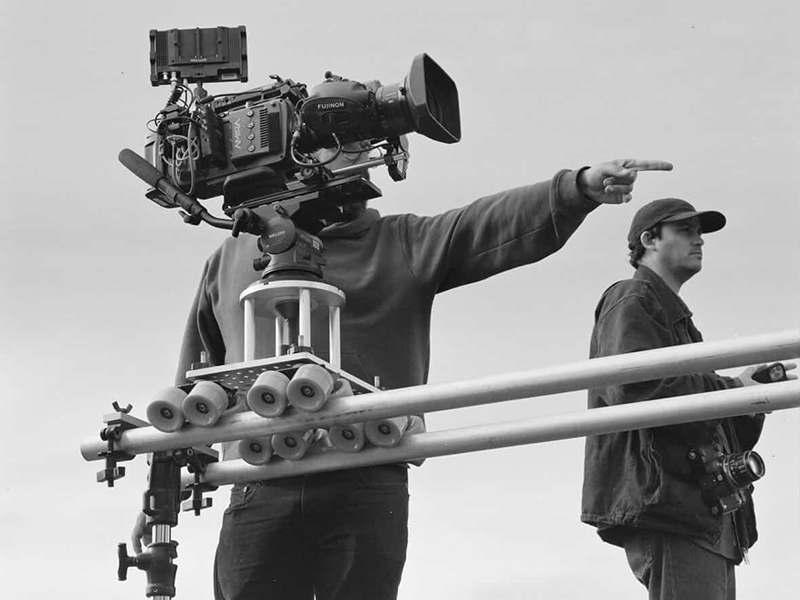
The influence of filmmakers like collaborators of David Fincher is particularly in the way the camera moves, also reminiscent for this reviewer of frenetic film clips by hip-hop and nü-metal artists. The gear used adds immensely to the effect of a wretched ratcheted up paranoia subsuming all in its sight. Track systems and sliders help to carry motion and capture the characters in a state of unease, Bryce adds:
“The idea was to create a more concentrated and observational feeling around the characters — almost as if we were watching whistleblowers inside the dystopian world (the team) imagined. Technically, we used sliders and track systems with telescopic raises, which allowed us to execute longer movements without the tracks appearing in frame. The slightly abrupt or jolted camera motion helped reinforce the surveillance aesthetic, making the viewer feel as though the camera was reacting quickly to what it was observing rather than moving in a perfectly smooth, controlled way.”
-

- BTS photo by Andre Donadio
As the video shutters to a close, we as an audience are left with an image of simple resistance, the artist staring back. Into the unknown perhaps, but leading this march with purpose. Surrounded by bystanders on and off screen, the video breaks the fourth wall and lingers with a question: what will you do to make sure there’s a better tomorrow?
Here is the official video for “Sucker Punch“
Music Video Credits
Directors: Daniel Wells Smith & Bryce Kraehenbuehl. Producer: Bryce Kraehenbuehl. 1st AD: Nicole Scheon. DOP: Andre Donadio. 1st AC: Ella Burton. Grip: Sam Twidale. Gaffer: Jack Bloomfield. Costumes: Lucinda Corin. Starring: Adam Lemmey, Nicole Scheon, Megan Brownbill, Daniel Cullen-Richards, Conor Mercury & Andre Donadio.


